

Timing Belt and Timing Chain Difference Explained
- anthony cook
- Jul 19
- 6 min read

A timing failure rarely gives a driver much warning. One moment a car or van may feel normal; the next, it may cut out, refuse to restart, or suffer major internal engine damage. Understanding the timing belt and timing chain difference helps you know what your vehicle needs, when it needs attention, and why delaying replacement can be a costly gamble.
Both components perform the same vital job: they keep the crankshaft and camshaft turning in precise time. That timing controls when the engine valves open and close. If it slips or fails, pistons and valves can collide on many engines. The result can be bent valves, damaged pistons, cylinder head repairs, or a replacement engine.
Timing belt and timing chain difference at a glance
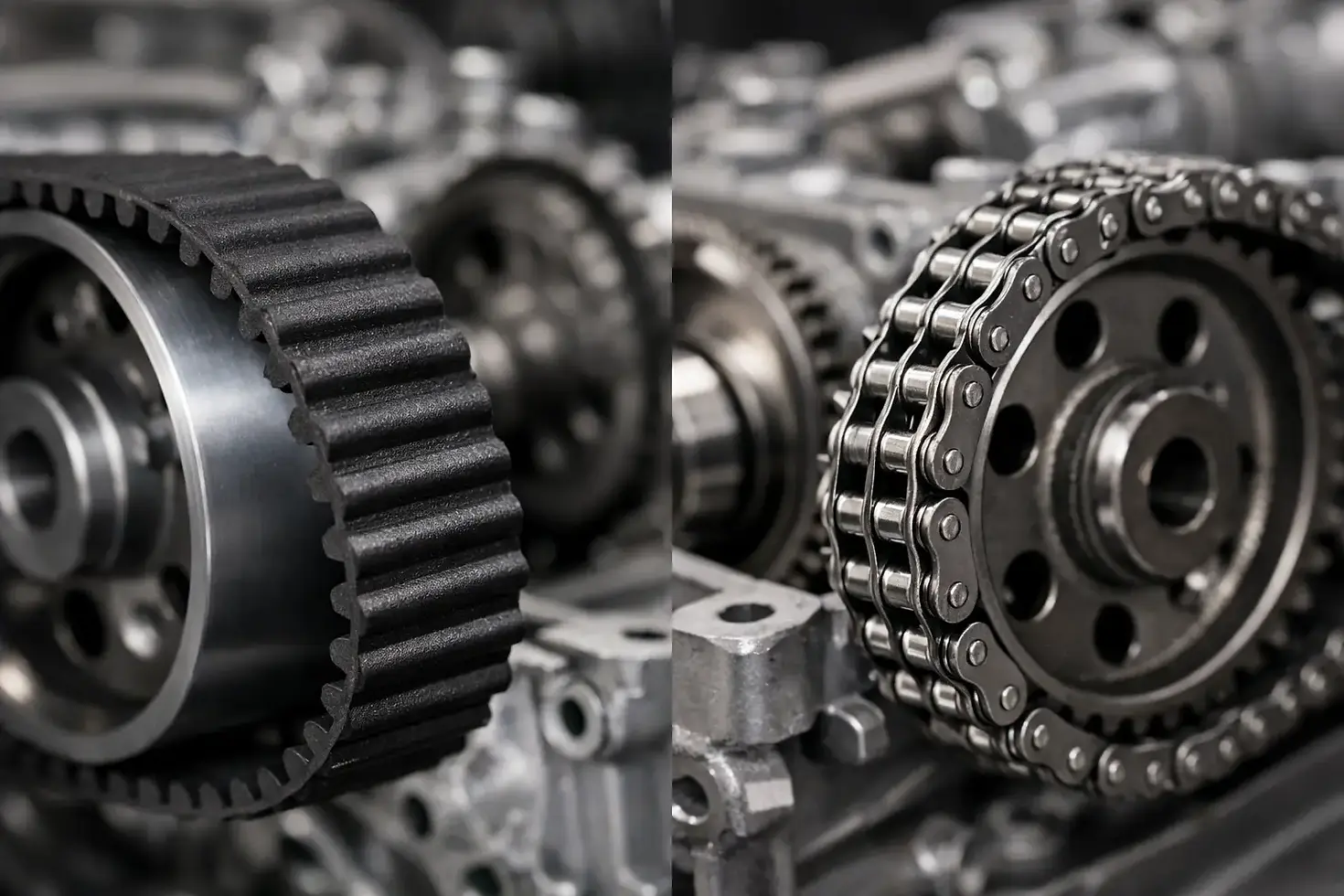
The main difference is the material and where the component runs. A timing belt is reinforced rubber. A timing chain is metal and operates inside the engine, lubricated by engine oil. There is also a third arrangement that causes understandable confusion: the wet timing belt, sometimes called a belt-in-oil system.
A conventional dry timing belt runs outside the engine oil system, usually behind a plastic cover. It has a defined replacement interval based on mileage and age. Timing chains were traditionally seen as longer-lasting, but they are not maintenance-free and can fail when oil quality, tensioners, guides or chain stretch become a problem.
A wet belt is still a rubber belt, but it runs inside the engine and is exposed to oil. These systems are fitted to a number of modern petrol and diesel engines, including certain Ford EcoBoost and EcoBlue units, plus some Vauxhall, Peugeot and Citroën engines. They need particularly careful servicing because the wrong oil, poor oil condition or an overdue belt can cause the belt material to break down.
What a timing belt does
A timing belt has moulded teeth that engage with gears on the crankshaft and camshafts. In many engines, it also drives other components such as the water pump. It is quiet, light and relatively economical to manufacture, which is why belts remain widely used.
The trade-off is that rubber degrades over time. Heat, mileage, contamination and age all affect it. Even a vehicle that covers low annual mileage can reach the age limit for replacement. This is why service schedules normally give both a mileage figure and a time period.
With a conventional belt, a proper replacement normally involves more than fitting one new belt. The tensioner, idler pulleys and, where applicable, water pump should be assessed and replaced as part of the correct job. Reusing worn associated parts can undermine the whole repair.
Wet belts need specialist attention
Wet belt engines require an especially methodical approach. As the belt deteriorates, particles can contaminate the oil. On some engines, that debris can restrict the oil pick-up strainer and affect oil pressure. Left unchecked, what began as a timing belt service can become turbocharger damage, lubrication problems or complete engine failure.
This is why an oil change alone is not a cure for a worn wet belt. The belt condition, oil pick-up system and correct manufacturer-approved oil specification all matter. Using an oil that is not approved for the engine may contribute to premature belt deterioration, even if the oil has been changed regularly.
What a timing chain does
A timing chain is made from metal links and runs inside the engine. It is guided by plastic or composite chain guides and held under tension by a tensioner, often operated by engine oil pressure. Chains can last a long time when the engine receives correct, regular oil servicing, but the phrase “lifetime chain” is often misunderstood.
There is no universal lifetime figure that applies to every vehicle or every driver. Chains can stretch, guides can wear, and tensioners can lose effectiveness. Poor oil quality, long oil-change intervals, repeated short journeys and low oil level all place extra strain on the system.
A worn timing chain may rattle briefly on cold start, especially for the first few seconds. It can also bring on an engine management light, cause rough running, misfires or fault codes relating to camshaft and crankshaft timing. A noise does not automatically mean the chain has failed, but it deserves prompt investigation rather than being ignored.
Unlike many belt replacements, chain work can be labour-intensive because the chain sits within the engine. Access may require significant dismantling, and the repair should include the relevant guides, tensioner and associated seals where required. Replacing only one worn part may be a false economy.
Is a timing chain better than a timing belt?
Not necessarily. The right system depends on the engine design, the vehicle’s intended use and how it is maintained. A belt offers quiet operation and predictable scheduled replacement. A chain can potentially last longer, but its condition depends heavily on clean oil, correct servicing and the health of its tensioning components.
For owners, the practical point is simpler: do not assume a chain means no timing maintenance, and do not treat a belt interval as optional. Both systems can cause expensive damage if neglected.
Wet belts sit in their own category. They can provide efficient, compact engine design, but they must be replaced at the correct interval using the right parts, procedures and oil. For high-mileage commuters, family cars and working vans, keeping ahead of that interval is far cheaper than dealing with an engine failure during a busy week.
How to find out which system your vehicle has
Your vehicle handbook and manufacturer service schedule are useful starting points, but registration look-up information is not always enough on its own. The same model can have different engines across different years, and service intervals can vary by engine code, use and manufacturer updates.
A Ford Fiesta, Focus, Puma, EcoSport, Transit, Transit Custom or Ranger may have different timing arrangements depending on its engine and year. The safest route is to confirm the exact engine from the registration and vehicle details, then check the current recommended interval rather than relying on hearsay from online forums.
If you have recently bought a used vehicle, check for documentary proof of any timing work. A stamp alone is less reassuring than an invoice showing the date, mileage, parts fitted and work completed. If there is no evidence, budget for inspection or replacement based on the vehicle’s age and mileage.
Warning signs should not be ignored
A timing belt can fail without obvious symptoms, which is why planned replacement matters more than waiting for a warning light. However, there are signs that deserve attention. Unusual rattling, ticking, poor starting, rough idle, loss of power, an engine management light or oil-related warnings should be checked properly.
For wet belt engines, visible belt debris during servicing, unexplained oil-pressure concerns or a history of incorrect oil are reasons to act sooner. For chain-driven engines, start-up rattle and timing correlation fault codes are common warning signs, but diagnosis should be based on inspection and testing rather than guesswork.
Do not continue driving a vehicle with a serious timing noise simply because it still runs. If the timing jumps by even a small amount, damage can occur very quickly.
What proper timing work should include
Timing work is not a job for shortcuts. The engine must be locked and timed using the correct tools and manufacturer procedure. The replacement parts must suit the exact engine, and all relevant tensioners, guides, seals, pulleys and oil-system checks need to be considered.
For wet belt replacement, the work should address the belt itself and the risk of debris in the lubrication system. Correct oil and a proper filter change are part of protecting the new belt and the engine that depends on it. A fixed quote should make clear what is included, so there are no surprises when the vehicle is already stripped down.
Emporium Garage Services specialises in wet belt, timing belt and timing chain work for drivers across Sittingbourne, Faversham, Teynham and the wider Kent area. Using OEM-quality parts and correct procedures, the focus is on preventing the larger repair bill, not simply getting a vehicle out of the workshop quickly.
If your timing service is due, your vehicle has an uncertain history, or you are hearing a new rattle on start-up, deal with it while it is still a maintenance job. A clear assessment and timely replacement can keep your car or van doing the job you rely on it for.


Comments